Paris, the political center
The Three MusketeersParis, the political center is more than a destination in the novel: it is the urban and political space where personal danger, court service, and public authority repeatedly converge. Its streets carry characters from pursuit to refuge, while the royal world associated with the city makes private acts consequential to the monarchy and its rivals.
An urban stage for pursuit
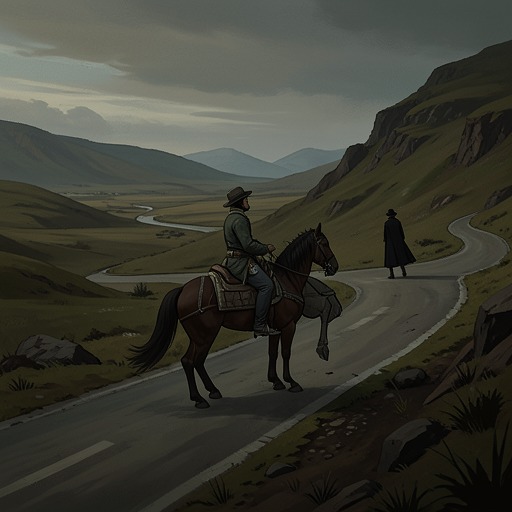
The novel’s opening action is set in Meung-en-Beauce, not Paris, and the distinction matters: Paris becomes a destination toward which the young d'Artagnan the younger moves, rather than the starting point of his story. Once in the city, however, its closely connected streets give his search its urgency. After failing to find the stranger he has pursued, d'Artagnan runs through neighboring streets and knocks repeatedly at a house whose openings are shut. The residents who answer from nearby windows and doors tell him that it has been uninhabited for six months. The city offers a trail, but not necessarily an answer; an apparently promising address becomes a dead end.
That pursuit soon broadens into an effort to find the mercer’s wife, whose knowledge is central to the intrigue. d'Artagnan presses his companions to stop joking and search for her, insisting that she is the key to what is happening. The episode makes Paris legible through movement and information: an address, a closed door, the testimony of neighbors, and the rapid circulation of news all shape what the characters can do. The city is not a passive backdrop to the intrigue. Its streets and buildings determine whether a search can proceed and whether a person can remain concealed.
Streets, refuge, and the court
One escape scene gives this urban geography a sharper human dimension. After leaving a house without stopping to close the door, d'Artagnan and Madame Bonacieux hurry down Rue des Fossoyeurs, turn into another street, and continue until they reach a square. Their flight is not a leisurely passage across the city: Madame Bonacieux is unsure where to go, and the immediate priority is to get away before deciding on a destination. The streets provide temporary distance from danger, but no lasting security.
Madame Bonacieux’s next concern is how to learn what has happened at The Louvre. She had hoped to communicate with Laporte through her husband, but instead d'Artagnan carries the information directly. He leaves her behind with a promise to return and reaches The Louvre just as ten o’clock strikes; the events that brought him there have taken place within half an hour. The close timing links a domestic refuge to the royal household through a messenger’s swift journey. Paris’s practical function in the plot is therefore also political: the city permits information to pass between private individuals and the Queen’s household, even when surveillance and danger make that passage precarious.
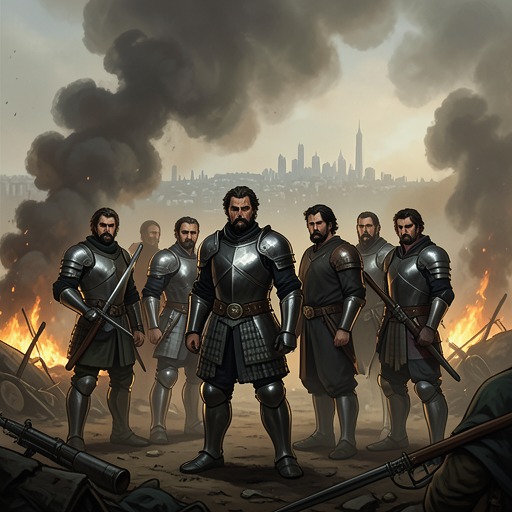
The same urban world contains the court’s competing centers of authority. The King's Musketeers belong to Louis XIII, while Cardinal Richelieu maintains a rival body of guards. Their rivalry reflects a larger contest over royal influence, but the novel also shows how personal loyalty complicates public rules. Louis XIII reminds M. de Treville that an edict forbids fighting, even as he wishes to thank the four men involved in a clash with Richelieu’s guards. M. de Treville argues that the encounter was a brawl rather than an ordinary duel, and the king agrees to receive the men discreetly by a back staircase. The exchange presents authority as both formal and negotiated: the law remains in force, yet the king makes room for a private gesture of favor.
A capital shaped by conflict beyond its streets
Paris’s political significance reaches beyond episodes that take place within its streets. The conflict surrounding La Rochelle is presented as a struggle over the last major stronghold of French Calvinism and the port’s strategic importance to England. Richelieu’s siege aims to close that route, while Buckingham arrives at the Île de Ré with a large fleet and army to intervene. The war’s practical conditions—poor provisions among the English forces and rough seas that wreck their vessels—help determine the pressure on the campaign. These events are not Paris street scenes, but they clarify the national conflict that gives the city’s court politics their stakes.
The siege also connects distant military action back to the capital. After the English are driven from the island, captured cannon and sixty flags are carried to Paris and displayed with ceremony in the arches of Notre Dame. The trophies turn a military outcome into a public representation of royal and cardinal power. Paris receives the signs of victory and gives them a conspicuous setting, making the capital a place where events fought elsewhere can be presented as political achievement.
The city and the novel’s politics
Across these episodes, Paris joins the intimate scale of personal danger to the larger scale of government. A hurried escape depends on streets and timing; a message to the Queen’s household depends on access and a trusted intermediary; a conflict between armed companies tests the boundary between law and royal favor. Elsewhere, the capital displays the outcome of a campaign whose causes and hardships lie far beyond its walls.
The city’s importance therefore rests not on a single scene but on its capacity to connect otherwise separate forms of power. Pursuit, concealment, court service, military rivalry, and public commemoration all become legible in relation to Paris. It is at once a place characters cross in haste and the political center toward which the consequences of their actions gather.